How to Build a Customized Decarbonization Roadmap

SUMMARY
OUTLINE
ENGAGE



INTRODUCTION: MOVING FROM ASPIRATIONS TO ACTION
Are you considering a Decarbonization Roadmap for your business? Whether your focus is on energy consumption, operational savings, or sustainability initiatives, the pace is picking up for businesses across the US towards implementing a customized Decarbonization Roadmap. UCLA’s 2025 State of Corporate Sustainability Disclosure Report states that 57% of S&P 500 companies have announced net zero or carbon neutral goals, and 24.4% have publicly disclosed a formal transition plan outlining their decarbonization pathway (1).
That said, often the hardest part of developing a Decarbonization Roadmap is the complexity of prioritization. Determining where to begin, which initiatives to sequence, and how to align sustainability goals with fiscal realities remains a persistent barrier. The tension between aspirational targets and constrained capital planning is where numerous organizations stall.
For many, these conversations are already underway, led by sustainability or long-range planning committees tasked with navigating evolving regulatory expectations and stakeholder demands. Pressure is intensifying from state agencies, financial partners, and communities alike. In this rapidly evolving environment, a successful Decarbonization Roadmap cannot be generic or theoretical. It must be organization-specific, financially grounded, and structured as a phased, executable plan that aligns long-term sustainability objectives with near-term budget realities.
In 2023, the United States had set aggressive climate targets: 100% carbon pollution-free electricity by 2035 and net-zero economy-wide greenhouse gas (GHG) emissions by no later than 2050 (2). While it is worth noting that federal climate policy has shifted considerably since these targets were announced, it doesn’t mean these targets won’t return. Organizations that wait risk falling behind on current and future funding, compliance, and community expectations.
The One Big Beautiful Bill Act, signed July 4, 2025, has narrowed the scope and shortened the eligibility timelines of many incentives established under the Inflation Reduction Act of 2022 (3). Even so, the pressure hasn’t gone away—it has only shifted. State and local mandates, utility programs, and investor and community expectations are still accelerating decarbonization timelines. Creating a financially grounded, organization-specific roadmap is now more critical than ever.
Is your organization truly on track to meet your sustainability milestones, or are critical decisions still being deferred? Veregy invites you to read this article for practical insight into how to structure and implement a Decarbonization Roadmap that aligns planning, budgeting, and project execution.
WHAT “DECARBONIZATION” MEANS IN PRACTICE
The terminology and frameworks associated with decarbonization can vary, creating confusion around what these efforts truly entail. Establishing a clear understanding of foundational concepts is our first step in building an effective and actionable strategy. To give a general overview, let’s first review what decarbonization is and some general terms for your knowledge:
- Greenhouse Gas Emissions (GHGs): GHGs are generated from the combustion of fossil fuels to generate electricity, to generate heat, and for transportation. These greenhouse gases, which include carbon dioxide (CO2), methane (CH4), nitrous oxide (N2O), and fluorinated gases, trap heat in the atmosphere and contribute to climate change.
- Decarbonization: The process of removing or reducing GHGs.
- DOE Net Zero: For a building to achieve zero operational emissions from energy use, it must: be energy efficient, free of on-site emissions from energy use, and powered solely from clean energy.
Buildings decarbonization is typically measured in two main ways:
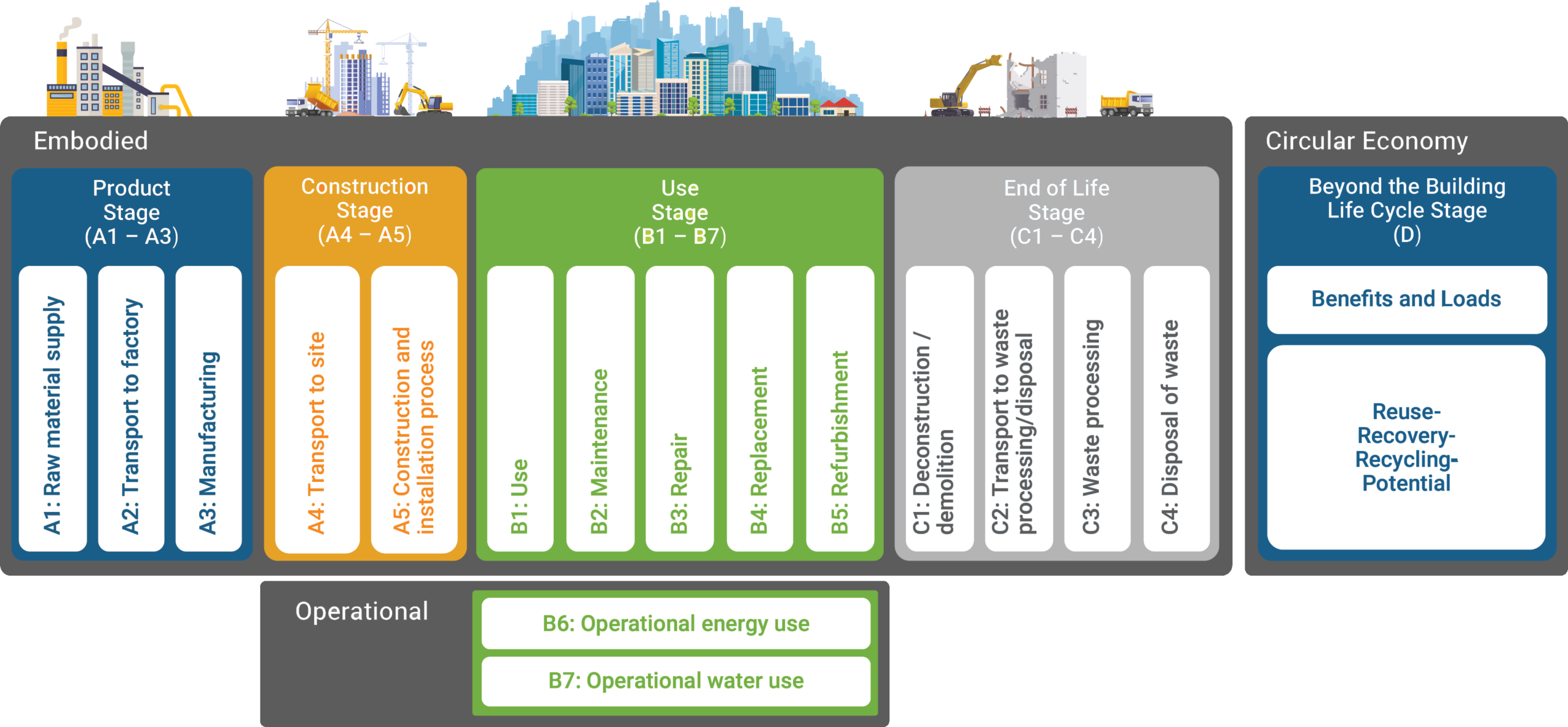
- Operational Carbon: GHGs which result from the ongoing operation of a building, most notably from the energy (electricity and natural gas) used by the building.
- Embodied Carbon: GHGs from the construction of the building, including manufacturing, transporting, and installation of building materials used in the construction. These emissions are locked in during construction and are not influenced by the operation of the building. It is everything in the life the building that is not covered by operational carbon. (4)
- Refrigerants: Hydrofluorocarbons (HFCs) used in HVAC and refrigeration equipment are a frequently overlooked but significant source of emissions, given their high global warming potential. Under the American Innovation and Manufacturing (AIM) Act, the EPA’s HFC Leak Repair and Management Rule took effect January 1, 2026, placing mandatory leak detection and repair requirements on owners of HFC-containing appliances with a refrigerant charge of 15 pounds or greater (5). This makes refrigerant management an increasingly important consideration in any building decarbonization plan.
Exhibit A
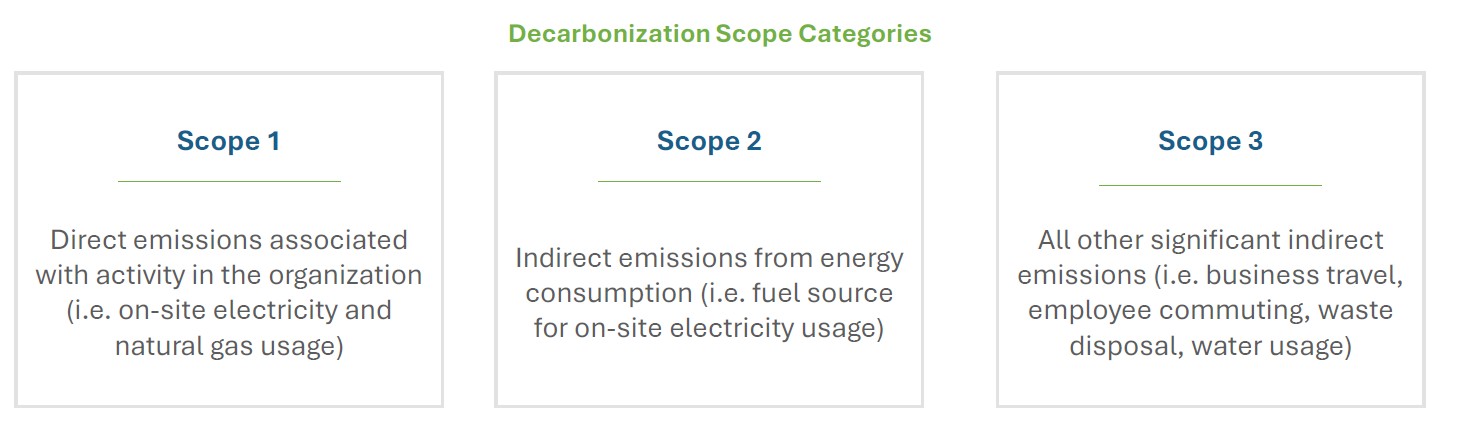
- Scope 1 emissions which are direct greenhouse gas emissions that occur from sources that are controlled. These include emissions from fuel combustion for boilers, furnaces, water-heaters, gas-using kitchen and laundry equipment, and vehicles.
Scope 2 emissions are indirect greenhouse gas emissions, generated with the purchase of utilities such as electricity, heating, or cooling. These emissions are generated at the source where the utility is produced (e.g. at the power plant) but are accounted for by an organization’s greenhouse gas emissions, as they are directly attributed to the organization’s energy use.
Scope 3 emissions are indirect greenhouse gas emissions that result from activities upstream and downstream of an organization, from assets not owned or controlled by an organization. Examples include purchased goods and services, business travel, employee commuting, waste, water, and investments.
Exhibit B
Ad-hoc and reactive maintenance to facilities upgrades may fix the problem temporarily, but serve no guidance towards a long-term, integrated strategy. The plan must address long-term needs as well as the quality of existing facilities for occupancy comfort. Collaborate with building owners, facility managers, engineers, and other stakeholders to develop and implement an effective long-term plan that achieves the desired decarbonization results.
The graphic below represents an example framework of policies and action items that could be developed based on suggested decarbonization plan goals:
Exhibit C
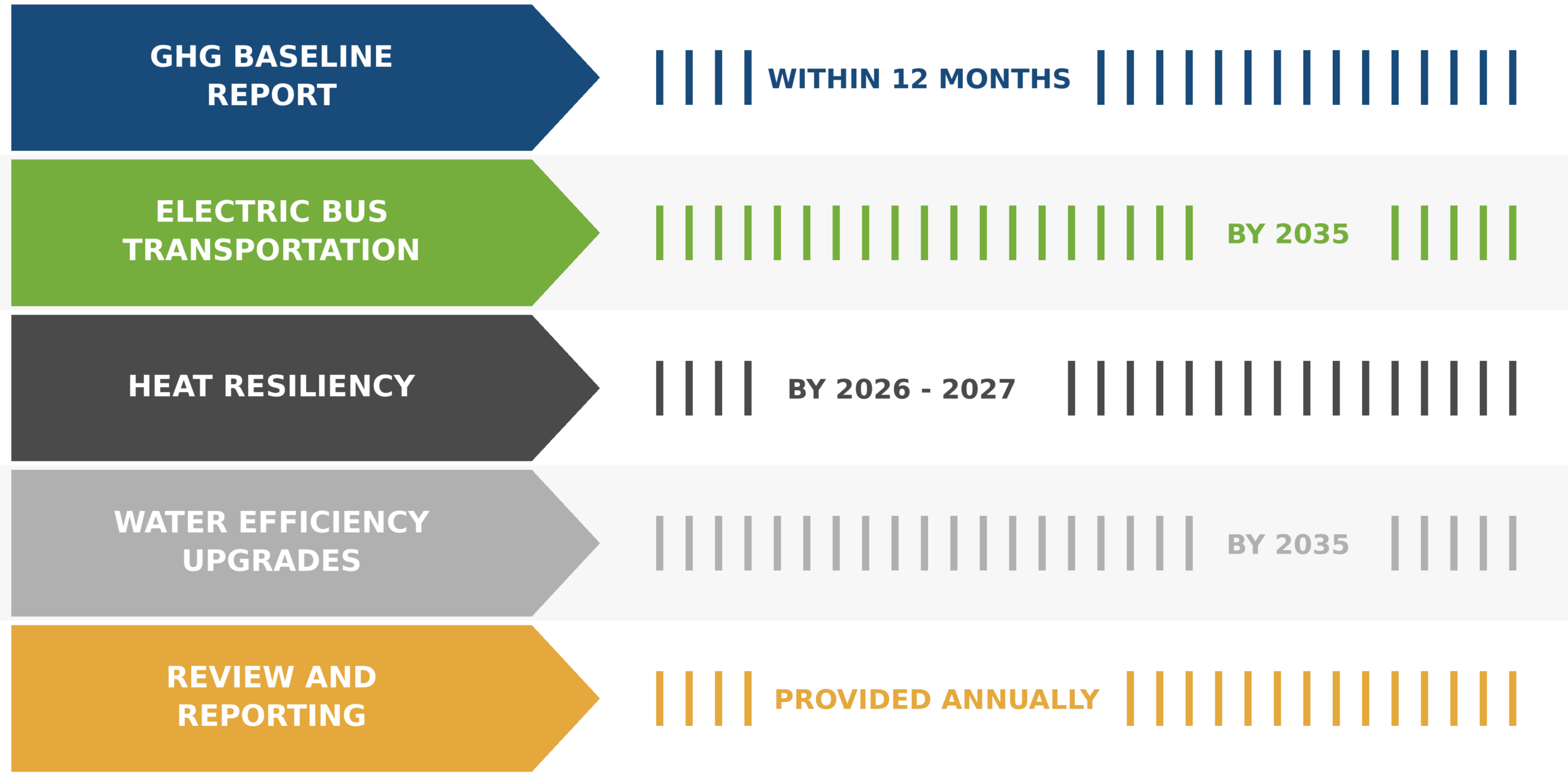
Now that you have a foundational understanding of the key concepts and terminology that underpin a comprehensive decarbonization strategy, we can dive deep into the steps it takes in creating this plan. A clear grasp of these terms is essential for interpreting the scope of a decarbonization roadmap and ensuring that long-term strategies are both credible and actionable.
START WITH A DATA-DRIVEN BASELINE
One of the most important components of developing a decarbonization roadmap is collecting data on your facilities. Establishing current energy use, costs, utility data, and emissions is the baseline for all roadmaps. Veregy offers energy audits to dive deep into your utility data and facility conditions. This comprehensive assessment identifies opportunities for energy efficiency improvements within your infrastructure. This process involves systematically examining various energy systems and operational practices to provide data-driven recommendations to reduce energy consumption and enhance overall efficiency.
Data Collection and Analysis
The energy audit process begins with collecting and analyzing relevant data related to your energy usage, facility infrastructure, and operational procedures. The data collection phase involves reviewing utility bills, conducting on-site inspections, and gathering information on equipment specifications and performance.
Establishing Baselines for Energy and Carbon Emissions
Once sufficient data is collected, Veregy establishes energy and carbon emissions baselines that serves as the foundational benchmark for your entire decarbonization roadmap. The energy baseline quantifies your organization’s current energy consumption across all energy sources, including electricity, natural gas, and other fuels, using utility bills and interval meter data. The carbon emissions baseline quantifies your organization’s current greenhouse gas emissions across Scope 1, Scope 2, and applicable Scope 3 sources, expressed in metric tons of CO2 equivalent (MTCO2e). Using the GHG Protocol’s standardized methodology, we translate your utility consumption, on-site fuel use, and operational data into a clear emissions inventory. This baseline is critical because it defines your starting point, enables meaningful goal-setting, and provides the reference against which all future reductions are measured. Without an accurate baseline, it is impossible to track progress, demonstrate results to stakeholders, or qualify for many grant and incentive programs.
Energy Systems Evaluation
Next, the energy optimization team evaluates the performance of existing energy systems, including HVAC (Heating, Ventilation, and Air Conditioning), lighting, water heating, and other equipment. This assessment includes an analysis of equipment age, condition, energy consumption patterns, and operational efficiency.
Financial Analysis
A critical component of the energy audit process is financial analysis, which assesses the cost-effectiveness of potential energy-saving measures. This analysis involves calculating the return on investment (ROI), payback periods, and life-cycle cost projections for various energy efficiency upgrades and operational improvements.
Recommendations and Implementation Plan
Based on the evaluation and financial analysis findings, the energy optimization team develops a set of tailored recommendations and an implementation plan for the client. These recommendations may include equipment upgrades, retrofitting initiatives, behavior-based strategies, and renewable energy integration. The implementation plan outlines the recommended actions, associated costs, timeline, and anticipated energy savings.
Measurement and Verification
Following the implementation of energy-saving measures, the energy audit process includes ongoing measurement and verification (M&V) to assess the effectiveness of the improvements. The M&V phase involves monitoring energy consumption, tracking performance metrics, and conducting periodic evaluations to validate energy savings and ensure that implemented measures deliver the expected results. The baseline energy measurements, analysis, and M&V methodologies for post-installation monitoring are consistent with IPMVP guidelines, industry standards, and benchmarks. Veregy is consistent with the Federal Energy Management Program (FEMP) document titled M&V Guidelines: Measurement and Verification for Federal Energy Projects, Version 4.0. (7)
The general equation used to calculate energy savings is:
Savings = ∑ (Baseline Energy – Post-Installation Energy) ± Adjustments
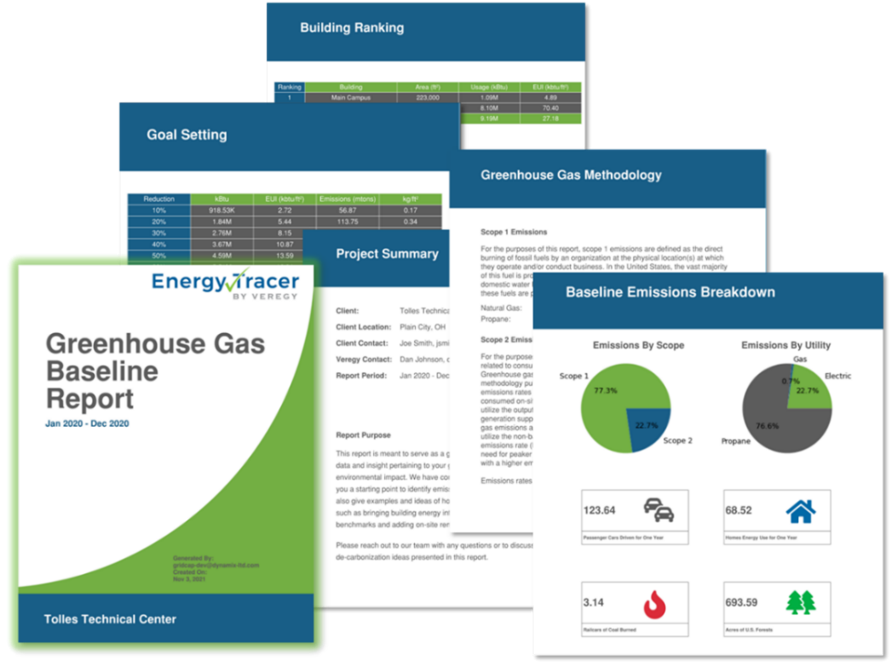
There are standard deliverables included in a data-driven baseline which include a Utility Summary Usage & Costs For Each Building, Utility Benchmarking For Each Building (EUI, Energystar), Utility Analysis and GHG Baseline Report. The GHG Protocol serves several interconnected purposes. It helps companies prepare accurate and fair GHG inventories through standardized approaches and principles, while also simplifying the process and reducing the costs of compiling those inventories. It equips businesses with the information needed to develop effective strategies for managing and reducing their emissions and promotes consistency and transparency in GHG accounting and reporting across companies and programs. Built on the expertise of over 350 leading experts from businesses, NGOs, governments, and accounting associations, the module has been road-tested by more than 30 companies across nine countries.
It is also worth noting that the GHG Protocol itself is evolving. The organization is currently revising its suite of corporate standards, with a full draft of the updated Corporate Standard expected for public consultation in mid-2026 (8), and proposed changes to Scope 2 guidance that would shift measurement toward hourly, location-based accounting (9). Veregy stays current with these developments so that the baselines we build for our clients remain methodologically sound as reporting standards continue to mature.
To support this process, Veregy offers Energy Tracer, our proprietary platform purpose-built for tracking, analyzing, and reporting energy and emissions data. Energy Tracer provides real-time utility monitoring, automated benchmarking, and customizable dashboards that make ongoing progress tracking effortless. That said, we understand that many organizations already have systems in place. Our team is fully equipped to work alongside your existing platforms and reporting tools, integrating seamlessly into your current workflows rather than disrupting them. We believe decarbonization is not a one-size-fits-all solution, and our approach is always tailored to your organization’s specific goals, capacity, and reporting preferences.
The reports we produce are equally flexible. Veregy can deliver our standard GHG Baseline and Utility Analysis reports, or we can develop fully customized deliverables designed around your stakeholder communication needs. For example, our consulting team has developed comprehensive consulting reports for clients such as the Santa Barbara County Decarbonization Roadmap, Alhambra Unified School District Energy Plan, and El Segundo Unified School District Sustainability Plan, each structured to reflect the unique priorities and community values of the organization. Below is a sample GHG Report Veregy provides for our clients:
Exhibit D
align decarbonization with community goals
A decarbonization roadmap does not exist in isolation. It is most effective when embedded within broader community goals.While decarbonization addresses the critical imperative of reducing greenhouse gas emissions, some are adopting the ESG framework which provides the strategic architecture to ensure decarbonization efforts are measurable, accountable, and aligned with stakeholder expectations. Integrating ESG into your decarbonization roadmap transforms what could be a singular climate initiative into a comprehensive commitment to sustainable value creation, and one that satisfies regulatory demands, attracts purpose-driven investors, engages employees, and builds long-term resilience.
It’s worth noting that not every organization formally adopts the ESG framework, and that’s not a barrier to building an effective decarbonization roadmap. What matters most is not the label applied to the effort, but whether the underlying principles are present: genuine stakeholder engagement, alignment with community priorities, and accountability for outcomes. Whether a client structures its approach around ESG, a homegrown sustainability framework, or simply a set of community commitments, the goal remains the same: to ensure that decarbonization efforts reflect the needs and expectations of the people and places they affect. A roadmap that engages employees, residents, regulators, and investors around shared goals will drive impact regardless of the formal framework attached to it. ESG offers one well-established structure for organizing that engagement and measuring progress, but it is the substance of stakeholder alignment and community investment, not the framework itself, that ultimately determines whether decarbonization efforts translate into lasting impact.
For clients who do structure their efforts around ESG, the framework breaks down as follows:
Environmental factors in climate action focus on climate change mitigation, natural resource conservation, and waste reduction and recycling. Climate change mitigation involves reducing greenhouse gas emissions, transitioning to renewable energy sources, and enhancing energy efficiency to limit global warming impacts. Natural resource conservation emphasizes the sustainable use of resources, the protection of ecosystems, and the preservation of biodiversity as core elements of environmental sustainability. Waste reduction and recycling programs help minimize environmental impact and support circular economy practices by reducing landfill use and encouraging material reuse. These fit well within the guidelines of United Nations 17 Sustainability Goals relevant under SDG 7 Affordable and Clean Energy, SDG 11 Sustainable Cities, and SDG 13 Climate Action. (10)
Social factors center on equity and justice, community engagement, and health and well-being in climate policies. Equity and justice require that vulnerable communities are not disproportionately affected by climate change impacts and that policies promote social inclusivity and fairness. Community engagement means actively involving local residents, indigenous groups, and grassroots organizations to build support, foster resilience, and implement effective climate solutions. Climate action should also address social determinants of health and well-being, including access to clean air, clean water, and green spaces, which are vital for quality of life.
Governance factors relate to transparency and accountability, policy integration, and risk management within climate action efforts. Good governance ensures clear communication of climate goals, progress tracking, and mechanisms for public participation and feedback to maintain transparency and accountability. Policy integration involves embedding climate considerations into governance structures, policies, and decision-making processes across governments, businesses, and institutions to mainstream sustainability and drive systemic change. Risk management includes assessing climate risks, developing adaptation plans, and ensuring business continuity in the face of climate-related disruptions.
identify and prioritize measures
There are three main categories of a decarbonization strategy which include Energy Efficiency (HVAC, Lighting, Smart Building Technology, and Building Envelope), Renewable Energy (Solar, Battery Storage), and Electrification (Fleet Transition).
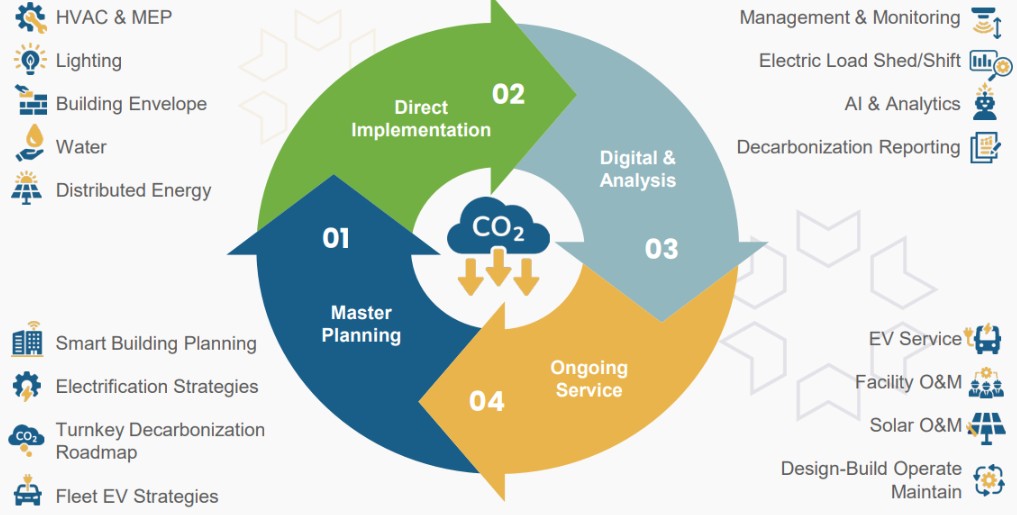
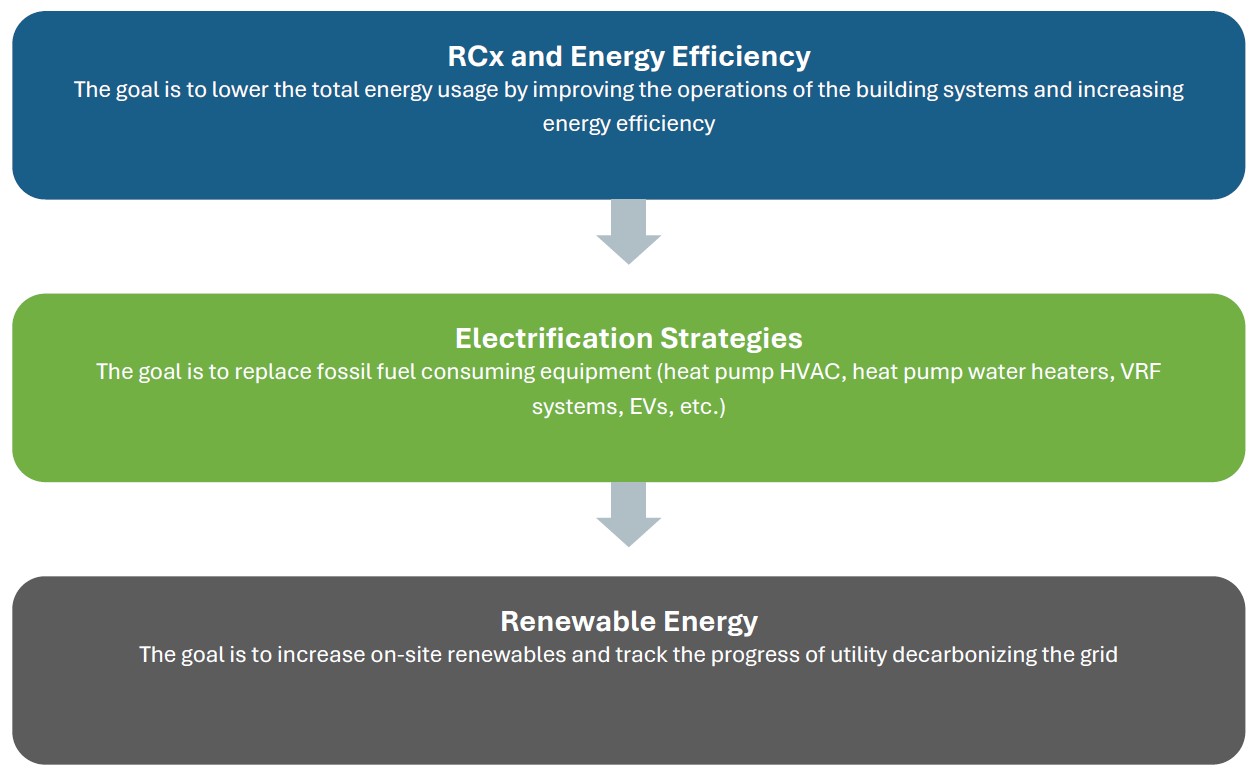
The order of your approach to these components matters. Addressing energy efficiency first is the most logical and cost-effective sequence in a decarbonization plan for a few key reasons.
Starting with energy efficiency reduces the overall energy load of a building or organization before any new systems are introduced. If you electrify or add renewables to an inefficient building, you end up sizing and paying for larger systems than you actually need. By tightening the building envelope, optimizing controls, and improving operational efficiency first, you shrink the demand that those future systems need to serve. Prioritize equipment replacement based on conditions and need, identify the equipment, systems, or infrastructure at the end of its useful life and, therefore, need immediate replacement and plan for capital projects 3, 5, and 10 years out.
From a financial standpoint, efficiency measures typically offer the fastest return on investment. They reduce utility costs immediately and generate savings that can help fund the next phases of the decarbonization roadmap. This sequencing also makes the business case easier to communicate to stakeholders, since early wins build confidence and momentum.
Once the energy load is right-sized, electrification makes more sense. Replacing fossil-fuel-burning equipment like gas boilers or furnaces with electric alternatives (heat pumps, VRF systems, etc.) is most effective when the building is already operating efficiently, because the electric systems don’t have to work as hard or run as often.
Renewable energy, such as rooftop solar, then becomes the final layer. At this stage, you know exactly how much electricity the building needs, so you can accurately size a solar installation or storage system without over- or under-investing. Adding renewables before efficiency would mean generating energy to cover waste rather than genuine need.
In short, the sequence efficiency first, then electrification, then renewables, ensures that each investment builds on the last, avoids oversizing, and delivers the greatest possible impact per dollar spent.
FUNDING AND IMPLEMENTATION STRATEGIES
Funding your Decarbonization Roadmap can seem like a daunting task. Fortunately, there are several models and opportunities for grants, rebates, and federal/state funding.
Stretching Bond Money With A Performance Contract
Performance contracting offers a strategic approach to achieving energy-related improvements, allowing you to maximize the utility of your bond money on capital improvements. By leveraging performance contracting, you can finance energy-saving improvements through guaranteed energy savings over time rather than spending bond money directly on those projects. Veregy is responsible for designing, installing, and maintaining energy-efficient equipment and monitoring the system to ensure it meets the performance metrics specified in the contract. If the system fails to deliver the promised energy savings, Veregy is financially obligated to make up the difference. This model thus minimizes the financial and operational risks for the client, enabling you to allocate bond money to other critical infrastructure or improvement projects. Performance contracting provides a win-win scenario: immediate energy and operational improvements without an immediate capital outlay and the ability to stretch bond money for broader strategic purposes.
C-PACE Financing
As federal tax incentives under the Inflation Reduction Act narrow in scope following the 2025 One Big Beautiful Bill Act (3), Commercial Property Assessed Clean Energy (C-PACE) financing has emerged as a durable alternative for funding deep retrofits. C-PACE allows building owners to finance energy efficiency, electrification, and renewable energy upgrades through a voluntary assessment on the property tax bill, often covering up to 100% of project costs with no upfront capital outlay (11). Cumulative C-PACE investment surpassed $10 billion by the end of 2024, with annual origination volumes exceeding $3 billion and continuing to grow into 2026 (12). As of early 2026, more than 35 states plus the District of Columbia have enacted C-PACE enabling legislation, making it a viable complement to performance contracting and grant funding for organizations across much of the country.
Grants And Incentives
With the movement towards decarbonizations for society as a whole there are many utility rebates, incentives, or grants available for energy efficiency upgrades and renewable energy projects. Veregy have been extremely successful at researching, applying, justifying, and securing utility rebates, incentives, and grants. Local utilities or state organizations often provide financial support for projects that accelerate energy efficiency and expand the use of renewable energy resources. Veregy has secured over $237 million in contracts that include grants and incentives for our clients. We have a history of working with the local utilities to determine if there are any eligible incentives for the proposed scope of work. We will then apply for those incentives on behalf of to help fund the project.
Many utility incentive programs across the U.S. cover a myriad of items, including such things as:
- Standard utility incentives: lighting, lighting controls, refrigeration, water heating, swimming pool heat pumps, commercial cooking equipment.
- Custom utility incentives: cooling, building envelope, HVAC, hood exhaust efficiency, compressed air, motors, exterior lighting, and more.
- Retro-Commissioning (RCx) incentives: projects that optimize overall building performance.
- New construction incentives: incentives for designing and installing higher efficiency equipment and systems than the code standard or planned design.
Federal Grants
Many federal agencies, such as the Bureau of Reclamation, Department of Energy, Department of Transportation, the Environmental Protection Agency, etc., offer incentives through low-interest funding and grants for projects that address historic preservation, water conservation, and accelerated energy conservation. There are too many to list; however, Veregy will tap into internal and external grant resources to ensure we investigate all project options.
State Grants
Visit DSIRE and enter your zip code or click on the interactive map to explore the programs available for your clients and projects. DSIRE is the most comprehensive source of information on incentives and policies that support renewables and energy efficiency in the United States (13).
conclusion: turning roadmaps into results
It is important to remember that a decarbonization roadmap is a well thought out, long-term strategy. It is not a single initiative but a strategic investment into a cleaner future for your organization and our planet. To keep the community and stakeholders engaged, it is important to quantify your ROI as something obtainable and measurable. Measuring the success of our sustainability consulting engagements involves a multi-faceted approach that includes both quantitative and qualitative metrics. Here’s how we evaluate the impact and success of our initiatives:.
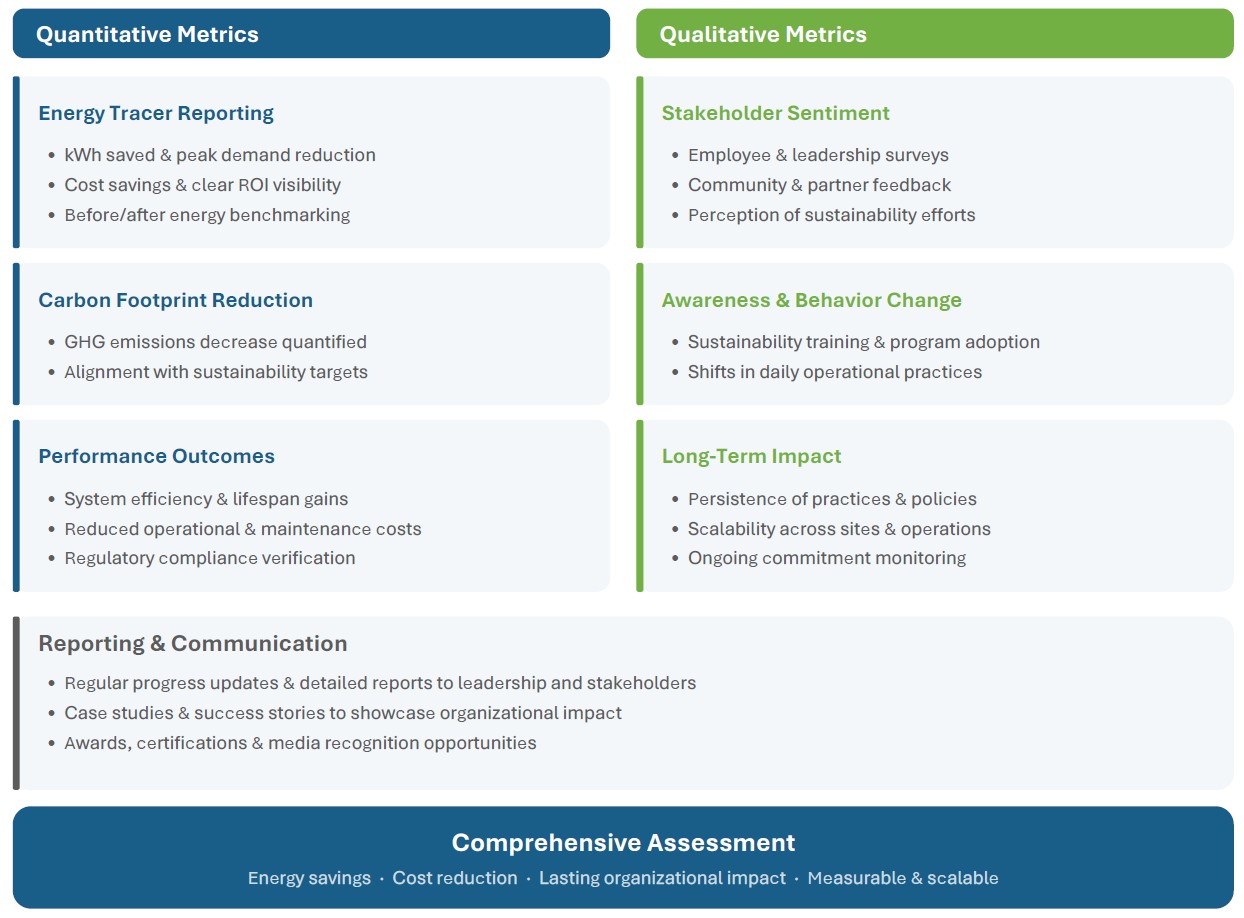
Long-term impact is measured by monitoring your organization’s continued commitment to sustainability, including the persistence of practices and policies introduced during our engagement and the potential to scale or replicate the project in other communities. Finally, reporting and communication play a key role in documenting and sharing results. Veregy provides regular updates and detailed reports that highlight progress, achievements, and areas for improvement. We also develop case studies and success stories to showcase the impact of our engagements and seek opportunities for public recognition of your sustainability efforts, such as awards, certifications, and media coverage.
Start Your Journey Today
The time to start your Decarbonization Roadmap is now! Our dedicated decarbonization team provides services in Strategic Master Planning, Carbon Footprint Analysis, Energy Efficiency Upgrades, Energy Auditing, Grant Sourcing, Retrocommissioning, Renewable Energy Integration, Fleet Electrification, Advanced Analytics & Monitoring, and more. Veregy’s Core Expertise includes:

1. master planning
- Decarbonization and Electrification
- Infrastructure Planning
- Facility Condition / Needs Assessments
2. Commissioning (Cx) & Retrocommissioning (RCx)
- New Construction Cx
- Major Renovations / Modernizations Cx
- Existing Building RCx
3. Complex Building Types
- School District / City / County Portfolios
- Higher Education
- Hospitals and Labs
- Large Commercial
- Airports
- Data Centers
4. Energy Consulting
- Owner’s Representation
- Energy Data Analytics and Reporting
- Utility Incentive Program Participation
- Energy Star Certification and Benchmarking
- LEED Consulting, Energy Auditing
5. Complex Mechanical and Control Systems
- Central Plants
- Built-up HVAC Systems
- Campuses with District Heating and Cooling
- Specialty HVAC Equipment (Labs, Hospitals, Data Centers)
- District Heating/Cooling, Built-up HVAC Systems
Don’t delay, every year of inaction makes the path steeper; our team will help you build a customized journey to decarbonization that will drive sustainability initiatives and operational savings through energy efficient upgrades.
CONTACT A VEREGY ACCOUNT EXECUTIVE OR ENGINEER AT VEREGYMARKETING@VEREGY.COM
Authors
References
1. UCLA. “Greenhouse Gas Protocol Corporate Standard Revisions Phase 1 Progress.” December 2025. chrome-extension://efaidnbmnnnibpcajpcglclefindmkaj/https://ghgprotocol.org/sites/default/files/2025-12/CS-Phase1-ProgressUpdate.pdf
2. U.S. Department of Energy. “On the Path to 100% Clean Electricity.” Last updated May 2023. https://www.energy.gov/sites/default/files/2023-05/DOE%20-%20100%25%20Clean%20Electricity%20-%20Final.pdf
3. Arnold & Porter. “From IRA to OBBBA: A New Era for Clean Energy Tax Credits.” July 2025. https://www.arnoldporter.com/en/perspectives/advisories/2025/07/from-ira-to-obbba-a-new-era-for-clean-energy-tax-credits
4. ASHRAE. “Building Decarb 101. Center of Excellence for Building Decarbonization.” Last updated May 2023. https://www.ashrae.org/about/cebd-building-decarb-101
5. Hunton Andrews Kurth. “Status Update on the AIM Act and EPA’s HFC Refrigerant Regulations.” December 2025. https://www.hunton.com/the-nickel-report/status-update-on-the-aim-act-and-epas-hfc-refrigerant-regulations
6. Climate Action Accelerator. “Baseline Carbon Footprint Report – Walkthrough Example.” Last updated May 2023. https://climateactionaccelerator.org/wp-content/uploads/2025/05/1.2-What-is-a_Carbon-Footprint-baseline-report.pdf
7. U.S. Department of Energy. “M&V Guidelines: Measurement and Verification for Performance-Based Contracts Version 4.0.” Last updated November 2015. https://www.energy.gov/documents/mvguide40pdf
8. GHG Protocol. “Corporate Standard Revisions: Phase 1 Progress Update.” December 2025. https://ghgprotocol.org/sites/default/files/2025-12/CS-Phase1-ProgressUpdate.pdf
9. Carbon Direct. “Key Updates to GHG Protocol and SBTi: What Companies Need to Know.” December 2025. https://www.carbon-direct.com/insights/key-updates-to-ghg-protocol-and-sbti-what-companies-need-to-know
10. United Nations. “Department of Economic and Social Affairs. Sustainable Development. The 17 Goals.” Last updated May 2023. https://sdgs.un.org/goals
11. Gray Group International. “C-PACE Financing in 2026: How Commercial Property Owners Can Fund Energy Upgrades With Zero Upfront Cost.” February 2026. https://www.graygroupintl.com/blog/c-pace-financing-commercial-buildings-guide/
12. NZero. “PACE Financing Steps Up as Federal Incentives Step Back.” October 2025. https://nzero.com/blog/pace-financing-steps-up-as-federal-incentives-step-back/
13. DSIRE. “Database of State Incentives for Renewables & Efficiency.” Last updated May 2023. https://www.dsireusa.org/
FAQs
What is a decarbonization roadmap? A decarbonization roadmap is a step‑by‑step plan to reduce your organization’s greenhouse gas emissions while balancing sustainability goals with budget and operations.
Why do organizations need a decarbonization roadmap? Organizations need a roadmap to turn climate and sustainability goals into practical, phased projects that meet funding, compliance, and community expectations.
What are greenhouse gas (GHG) emissions? GHG emissions are gases like CO2 and methane released from burning fossil fuels for electricity, heating, and transportation that trap heat and drive climate change.
What is the difference between operational and embodied carbon? Operational carbon comes from running the building (like electricity and gas use), while embodied carbon comes from making, transporting, and installing the building materials.
What are Scope 1, 2, and 3 emissions? Scope 1 are direct emissions from owned sources (like boilers and vehicles), Scope 2 are indirect emissions from purchased energy, and Scope 3 are other indirect emissions such as travel, waste, and purchased goods.
Why is a data-driven baseline important? A data-driven baseline shows your current energy use and emissions, so you can set realistic goals, track progress, and qualify for many grants and incentive programs.
What is an energy audit in this context? An energy audit is a detailed review of your facilities, utilities, and equipment to find cost‑effective ways to save energy and reduce emissions.
How does ESG relate to decarbonization? ESG provides a framework to make decarbonization measurable and accountable by linking environmental, social, and governance goals to climate actions and community priorities.
What are the main types of decarbonization measures? The main types are energy efficiency (HVAC, lighting, controls, envelope), renewable energy (solar, battery storage), and electrification (such as fleet transition).
In what order should decarbonization measures be done? The article recommends doing energy efficiency first, then electrification, and finally renewables so each step is right‑sized and delivers the best value.