LEARN MORE ABOUT OUR
THOUGHT LEADERS.
Veregy’s energy Experts
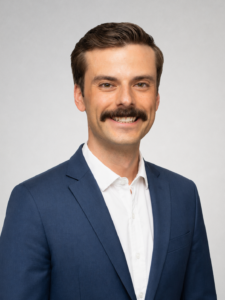
Sean Murphy, PE, CCP, CEM, LEED AP BD+C
Engineering Manager, West Region
Stay ahead on the latest energy industry insights and trends. Click the link below to view more articles published by the Veregy team.
Bio:
Project Implementation
County of Santa Barbara
Veregy has been a long‑term energy partner to the County of Santa Barbara, helping identify and capture meaningful savings across a diverse portfolio of facilities. Currently, Veregy is supporting the County at the Tajiguas Landfill’s Center by tracking monthly performance metrics to validate both operational accuracy and financial stability at the Material Recovery Facility and Anaerobic Digestion Facility, ensuring that waste-processing operations are aligned with the County’s sustainability and cost‑reduction goals. At the Foster Road campus, Veregy is auditing and designing a comprehensive multi‑site interior and exterior lighting upgrade spanning more than 11 buildings and multiple departments; this project is projected to save over 425,000 kWh of electricity annually and nearly $100,000 per year in utility costs, with Veregy also coordinating on‑bill financing and providing turnkey implementation support to streamline project delivery. In addition, through the Southern California Regional Energy Network (SoCalREN), Veregy is delivering no‑cost, whole‑building energy audits for the Sheriff Administration Building, Sheriff Training Center, and Sheriff Shooting Range, evaluating interior and exterior lighting, controls, and HVAC systems to uncover new efficiency measures and future savings opportunities.
University of California, Los Angeles
Completed in 2008, the facility is supplied with electricity, steam, and chilled water from UCLA’s central plant. The facility is
continuously occupied, 24 hours per day, 365 days per year. The 3rd floor consists of mechanical and electrical equipment spaces.
Mechanical and electrical equipment is also located in the rooftop penthouse, adjacent to two helipads. There are 23 operating
rooms, emergency care, trauma centers, imaging centers, examination and consultation suites, pharmacies, kitchens, food
service facilities, laundry, sterile processing, and numerous other support spaces commonly found in a large regional healthcare facility. Electricity use is measured by four main electric meters, while steam and chilled water are measured with one BTU meter for each commodity. The three primary objectives of the project are to decrease operations and maintenance effort and costs, increase indoor environmental quality and occupant comfort, and realize immediate and long-term energy savings and peak demand savings. This project combines traditional, field-based RCx with technology-enabled MBCx to achieve the highest value from each approach to commissioning.
Oakland University
We partnered with Oakland University to evaluate the performance of its campus energy infrastructure and develop a strategic roadmap for future heating and cooling improvements. The campus relies on a centralized High Temperature Hot Water (HTHW) district heating system and a cooling system served by three chiller clusters, which together support 20 major buildings across 2.25 million square feet of the university’s main campus.
Our work assessed the existing centralized CHP-based heating plant and compared it with decentralized system alternatives to determine the most efficient and financially responsible path forward. Using interval submeter data, hydraulic and temperature modeling, and calibrated energy simulation tools, we established a baseline for building energy use, identified areas of energy loss, and evaluated opportunities for operational and capital improvements.
The outcome was a set of three master plan scenarios — short-term, medium-term, and long-term — that provide Oakland University with a phased strategy for modernizing its heating and cooling systems. The analysis also quantified potential greenhouse gas reductions, helping the university align infrastructure planning with its sustainability goals while balancing performance, reliability, and long-term cost.